Limited-Time Offer: 42% Off Steel Structures
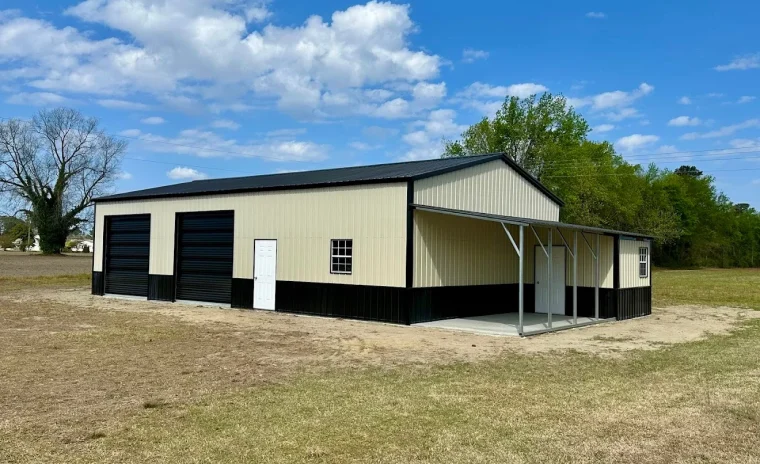
Finance Your Metal Building: Rent-to-Own & Long-Term Loans
Why upfront cost shouldn’t stop your metal building project
If you’ve been wondering how to finance your custom metal building, you’re asking the right question at the right time. The upfront cost is the single biggest obstacle keeping residential and commercial buyers across North Carolina from pulling the trigger on projects they genuinely need. Whether it’s a two-car garage in Winston-Salem, a steel barn for your farm in the Triangle area, or a commercial workshop in the Piedmont Triad, that initial investment can feel overwhelming when you’re trying to manage cash flow, property taxes, and other expenses that come with owning land in our region.
Here’s the good news: High Quality Steel Structures has spent over a decade building financing programs specifically designed to remove that barrier. We’re not talking about complicated, one-size-fits-all bank loans that require perfect credit and a massive down payment. We offer two clear paths that real people actually use: a rent-to-own program that gives you flexibility and manageable monthly payments without a hard credit check, and traditional long-term financing with up to 120% coverage and 20-year terms that can bundle everything from site prep to installation into one loan. This guide to rent-to-own and long-term loans will walk you through both options so you can choose the right path and move forward today.
What makes these programs different from what you’d find at a traditional lender? They’re built around how metal building projects actually work in the real world. When you’re planning a custom metal garage or steel structure, you’re not just paying for the building itself. There’s site preparation, which in the red clay soil common around Forsyth and Wake Counties often means grading and compacting to create a stable base. There’s concrete work for the foundation or slab, which can run several thousand dollars depending on your building size. There are permits and inspections required by your local county, delivery fees that vary based on your distance from our network of manufacturers, professional installation labor, and sometimes electrical panels or plumbing hookups if you’re building a workshop or barndominium.
Traditional lenders often balk at financing anything beyond the structure itself, leaving you scrambling to cover thousands in additional costs out of pocket. A bank might approve you for the $15,000 building but tell you to figure out the $4,000 site prep and $6,000 concrete slab on your own. That defeats the purpose of financing in the first place. Our financing options are designed to cover the full project scope, so you can move forward without emptying your savings, tapping a home equity line, or waiting years to accumulate enough cash. You get one payment, one approval process, and one clear path to ownership.
The choice between rent-to-own and long-term loans isn’t arbitrary. Each path serves a specific type of buyer and project. Rent-to-own is ideal for residential customers who value flexibility, want to avoid the credit scrutiny and paperwork burden of traditional lending, and are working on projects in the $8,000 to $20,000 range. Think metal garages, hobby barns, storage buildings, and carports. Long-term loans, on the other hand, are built for larger-scale investments: commercial metal buildings, agricultural structures, barndominiums, and multi-use facilities where the total project cost might reach $40,000, $80,000, or more. These loans offer extended repayment terms that keep monthly payments reasonable even on six-figure projects, and the 120% coverage option ensures every dollar of the project is funded upfront.
Understanding your true project cost is the first step. Let’s say you’re a homeowner in East Winston-Salem planning a 30×40 steel garage with a vertical roof to handle snow load and rain runoff. The building itself might cost $12,000. Delivery adds another $800. Installation by a professional crew runs $2,500. You need a gravel base and some minor grading because your lot slopes toward the road, which adds $1,200. Suddenly, your $12,000 building is actually a $16,500 project. If you only secured financing for the building, you’d need to come up with $4,500 in cash before the installation crew even shows up. That’s where financing that covers the full scope makes all the difference.
The same principle applies on a larger scale. Imagine you’re a farm operator in Harnett County looking to build a 60×80 clear span metal building for equipment storage and a maintenance bay. The structure costs $55,000. Site prep, including clearing, grading, and a crushed stone base, runs $8,000. A concrete slab for the maintenance area adds $12,000. Electrical service with a 200-amp panel costs $6,000. Permits and engineering stamps required by the county add another $2,500. Your real project cost is $83,500. A long-term loan with 120% coverage can finance up to $100,200, which means every line item is covered, and you even have a cushion for unexpected costs or upgrades you decide to add mid-project.
Across the Piedmont Triad and Triangle regions, we see predictable seasonal patterns in financing inquiries. Spring brings a wave of residential buyers planning garages and barns, motivated by tax refunds and the desire to get buildings in place before summer heat makes outdoor projects less appealing. Late summer and fall attract commercial buyers who want to finish construction before year-end for tax depreciation benefits. Winter is quieter but sees interest from serious buyers who want to lock in pricing and schedule early installation dates for the following spring. Understanding these patterns helps you plan your own timeline and take advantage of periods when permitting offices and installation crews have more availability.
This guide walks you through both financing paths in practical detail. You’ll learn exactly how rent-to-own works for residential buyers who value flexibility and fast approvals, how long-term loans support large-scale commercial metal buildings and barndominiums, what expenses each option covers, how to evaluate your own project scope and budget, and how to choose the right fit for your credit situation and timeline. By the end, you’ll know exactly which path makes sense for your needs and how to start the application process today. Let’s break down the numbers, remove the confusion, and get you moving toward the custom metal building you’ve been planning.
How rent-to-own puts your building within reach today
Rent-to-own is exactly what it sounds like: you start using your custom metal building immediately while making affordable monthly payments, and over time, you own it outright. No massive down payment. No hard credit check that could disqualify you before you even start. No waiting years to save up the full amount. It’s the financing path that homeowners across the Piedmont Triad choose when they want a steel garage, metal barn, or storage building now but need a payment structure that fits a real-world budget.
Here’s how it works in practice. Let’s say you need a 24×30 metal garage in East Winston-Salem to protect your vehicles from the humidity and summer storms we get every year. The total project cost, including the building, delivery, and installation, might run around $8,000 to $12,000 depending on your customization choices (roof style, doors, windows, insulation). With rent-to-own, you’re not writing a check for that full amount upfront. Instead, you make a smaller initial payment to get started, then pay monthly installments over an agreed term, often 36 to 60 months. Once you’ve completed the payment schedule, the building is yours free and clear.
The biggest advantage? There’s no hard credit pull that could ding your score or result in a rejection letter. High Quality Steel Structures evaluates rent-to-own applications based on income verification and payment history rather than a traditional credit score. That makes this option incredibly popular with first-time buyers, self-employed contractors, or anyone rebuilding their credit after a rough patch. You’re not locked out because of past financial mistakes. You just need to demonstrate that you can handle the monthly payment comfortably.
What expenses does rent-to-own cover? Typically, the program includes the metal building itself, delivery to your property, and professional installation by our experienced crews. Some buyers also roll in basic site prep like gravel base or minor grading if the lot isn’t quite level. It won’t cover major excavation or a full concrete slab in most cases (though you can discuss add-ons), but it handles the core project so your custom metal building goes up fast and functions immediately. For a homeowner adding a two-car garage or a small equipment shed, that’s usually everything you need.
Rent-to-own is especially common in residential markets around Winston-Salem, Greensboro, and the Triangle, where property owners want to add value and storage without tapping home equity lines or maxing out credit cards. During spring and early summer, when everyone’s planning outdoor projects and looking to store lawn equipment, RVs, or workshop tools, we see a huge uptick in rent-to-own inquiries. People recognize that paying $250 to $350 a month over a few years is far more manageable than coming up with $10,000 in one shot. And because metal garages and barns last decades with minimal maintenance, you’re making payments on an asset that will serve you for the long haul.
One real-world example: a couple in Ardmore needed a steel barn for their hobby farm, but they’d just bought the property and didn’t want to drain their emergency fund. They chose rent-to-own, selected a 30×40 regular roof barn, and had it installed within a few weeks. Their monthly payment fit comfortably within their budget, they avoided a big credit inquiry, and they now own a structure that houses livestock, hay, and farm equipment. That’s the kind of flexibility rent-to-own delivers.
If your project is residential in scope (a garage, barn, carport, or storage shed), you prefer predictable monthly payments, and you want to avoid the hassle and risk of a traditional loan application, rent-to-own is worth exploring. The application process is straightforward: you provide income documentation, choose your building specs using our 3D estimator, review the payment schedule, and move forward. You can often get approved and scheduled for installation in a matter of days, not weeks or months.
Why Piedmont Triad homeowners choose rent-to-own for garages and barns
For residential buyers who want to start building now but need flexibility, rent-to-own is the smart path forward. This program is designed for homeowners, hobby farmers, and small business owners across the Piedmont Triad who may not qualify for traditional financing or simply prefer manageable monthly payments without a massive down payment. But what exactly does rent-to-own cover, and how does the process work from application to ownership?
Let’s start with term lengths and payment structures. Most rent-to-own agreements run between 36 and 60 months, though some buyers negotiate shorter or longer terms depending on their budget and the building size. For a standard 20×30 metal garage, you might pay $220 to $280 per month over 48 months. A larger 30×40 steel barn could run $320 to $420 per month over the same period. A small 12×20 storage shed might cost as little as $150 to $200 monthly over 36 months. These payments include the building, delivery, and installation, so there are no surprise bills after your structure goes up.
The no-credit-check feature is what sets this program apart from traditional lending. Instead of pulling your FICO score and evaluating your debt-to-income ratio through a rigid algorithm, High Quality Steel Structures looks at your current income and payment history. You’ll provide recent pay stubs, bank statements, or tax returns if you’re self-employed. The goal is to verify that you have stable, sufficient income to cover the monthly payment comfortably, not to judge your financial past. This approach opens the door for buyers who’ve experienced bankruptcy, medical debt, or other credit challenges but are back on solid financial footing.
Here’s the step-by-step process. First, you reach out through our rent-to-own page or call our office to discuss your project. We ask about the type of building you need (garage, barn, carport, workshop), the size you’re considering, and your property location. Next, you use our 3D estimator to configure your building with the roof style, door placement, color, and any upgrades like windows or insulation. This tool gives you a real-time price estimate so you know exactly what you’re working with.
Once you’ve settled on a design, we move to the application. You submit income documentation, and we review it internally, usually within 24 to 48 hours. If approved, we present a payment schedule showing your monthly amount, term length, and total cost. You review it, ask any questions, and sign the agreement. From there, we schedule your site survey and delivery. Most buyers see their building installed within two to four weeks of approval, depending on the season and installation crew availability.
What happens at the end of the payment term? Once you’ve made your final payment, ownership transfers to you automatically. There’s no balloon payment, no refinancing step, no additional fees. The building is yours, and you receive documentation confirming full ownership. At that point, you can insure it under your homeowner’s policy, modify it however you like, or even sell it with your property if you move.
Real-world examples help illustrate who benefits most from rent-to-own. A homeowner in Reynolda wanted a 24×24 two-car garage to protect a classic truck and create a workshop space. He had the income but didn’t want to take out a home equity loan or use a high-interest credit card. Rent-to-own gave him a $285 monthly payment over 48 months, and the garage was installed in three weeks. Another customer in the Triangle area needed a 30×50 steel barn for her small horse operation. She was self-employed and didn’t have the tax returns a bank would require for a traditional loan. Rent-to-own approved her based on her business bank statements, and her barn went up before the fall rains arrived.
This financing path works particularly well for residential metal garages, storage buildings, hobby barns, and carports in the $8,000 to $20,000 range. It removes the pressure of securing a large loan while still delivering the quality steel structure you need. High Quality Steel Structures walks you through every step, and most applicants receive approval within days, not weeks. If you value flexibility, want to start building immediately, and prefer a transparent payment structure with no credit surprises, rent-to-own is worth exploring.
Choosing the right financing path for your project size and budget
Now that you understand both financing paths, the natural question is: which one is right for your project? The answer depends on four key factors: project size and scope, your budget and cash flow, your credit situation, and your timeline. Let’s walk through a practical decision framework using real-world examples from buyers across North Carolina.
Start with project size and scope. If you’re adding a residential metal garage (20×30, 24×30, 30×40), a carport to protect vehicles, a storage shed for lawn equipment, or a small barn for a hobby farm, rent-to-own is almost always the better fit. These projects typically fall in the $8,000 to $25,000 range, install quickly, and don’t require extensive site work beyond basic grading or a gravel base. The structure itself is the primary expense, and rent-to-own covers it cleanly with manageable monthly payments. On the other hand, if you’re building a commercial metal structure (40×60 or larger), a barndominium with living quarters, a steel warehouse, or an agricultural building that needs a full concrete slab and utilities, long-term financing is the only practical option. These projects run $50,000 to $200,000+, involve multiple contractors and permits, and require a lender who understands the full scope of costs. Rent-to-own simply can’t scale to that level.
Next, consider your budget and cash flow. Rent-to-own requires little to no money down, making it ideal if you need to preserve cash for other expenses or don’t have $5,000+ sitting in savings. Your monthly payments will be higher relative to the loan term (since you’re paying off a smaller total over 3 to 5 years), but there’s no big upfront shock. Long-term financing often requires a down payment (10% to 20% is common, though some lenders go lower), but it spreads a much larger total over 10, 15, or 20 years, resulting in lower monthly payments despite the bigger project cost. If you’re a business owner who needs to maintain working capital or a homeowner who’s just purchased land and can’t tie up another $10,000, rent-to-own preserves liquidity. If you have some savings and prefer the lowest possible monthly obligation, long-term financing with a modest down payment is smarter.
Credit situation is the third factor. Rent-to-own does not require a hard credit check or a minimum credit score. That makes it the go-to option for buyers with limited credit history, past financial challenges, or anyone who’s self-employed and doesn’t have traditional W-2 income documentation that banks love. Long-term loans do check credit, and while requirements vary by lender (some approve scores in the mid-600s, others want 680+), you generally need decent credit to qualify for favorable terms. If your credit is strong and you’re confident you’ll get approved with a competitive interest rate, long-term financing gives you more purchasing power. If your credit is shaky or you simply don’t want the inquiry and approval risk, rent-to-own is the safer, faster route.
Timeline also plays a role. Rent-to-own applications can be approved in days, and your building can be scheduled for installation within a couple of weeks (depending on our production queue and weather). It’s the fastest path from decision to completed structure. Long-term financing takes longer: the lender needs to review your application, order appraisals or inspections, finalize terms, and disburse funds in stages as the project progresses. You might wait several weeks from application to breaking ground, though High Quality Steel Structures works hard to streamline that process. If you need a building up immediately (storm season is coming, you’re losing rental income without storage, your business is growing fast), rent-to-own is the speed option. If you’re planning six months ahead and can afford to go through a more deliberate approval process, long-term financing is fine.
Let’s put this in context with two real examples. A homeowner in Downtown Winston-Salem wants a 24×30 two-car garage to stop paying for off-site storage and protect their vehicles from summer heat and winter ice. The project costs about $11,000 including delivery and installation. They have okay credit (mid-600s), a steady job, but only $2,000 in savings they don’t want to drain. Rent-to-own is the obvious choice: no down payment, no credit inquiry, monthly payment around $275 over 48 months, and the garage is up in three weeks. Compare that to a farm operator in the Triangle expanding their operation with a 50×80 steel barn for livestock and equipment storage. Total project cost is $85,000 (building, slab, electrical, water lines, permits). They have strong credit, $15,000 available for a down payment, and they’re planning this as a multi-month project coordinating with concrete contractors and electricians. Long-term financing with 120% coverage, a 20-year term, and a monthly payment around $600 makes perfect sense. They get the coverage they need, the payment fits their farm income, and they’re not forced into a short-term rent-to-own structure that would result in unaffordable monthly obligations.
When you’re comparing your own situation, write down your project scope, available cash, credit comfort level, and urgency. If three or four factors point toward rent-to-own, that’s your path. If they point toward long-term financing, go that direction. And if you’re genuinely on the fence, call our team and talk through your specific numbers. We help buyers make this decision every week, and we can run scenarios so you see exactly what each option looks like in dollars and timeline. The goal isn’t to push you toward one or the other; it’s to match you with the financing structure that removes barriers and gets your custom metal building project done right.
Starting your application and getting your building scheduled
You’ve learned how both financing paths work, evaluated your project against the decision framework, and identified which option fits your situation. Now it’s time to move from planning to action. The application process for both rent-to-own and long-term financing is designed to be simple, transparent, and fast. High Quality Steel Structures has streamlined every step so you spend less time on paperwork and more time picking out building specs and planning your project.
If you’re pursuing rent-to-own, start by gathering basic documentation: recent pay stubs or income verification (bank statements if you’re self-employed), a government-issued ID, and contact information. You’ll fill out a short application (online or by phone) that asks about your income, employment, and the building you’re interested in. There’s no hard credit pull, so your score won’t be affected. Once you submit, our team reviews it internally, usually within one business day. If approved, we’ll send you a payment schedule showing your initial payment, monthly amount, term length, and total cost. You review it, ask any questions, sign digitally, and make your first payment to lock in your spot in the production schedule. From there, you’ll work with our design team to finalize your building specs using the 3D estimator, choose colors and options, and confirm your site is ready for installation. Most rent-to-own buyers go from application to installed building in three to five weeks, depending on our current queue and weather conditions in the Piedmont Triad.
If you’re pursuing traditional long-term financing, the process has a few more steps but remains straightforward. Start by requesting a detailed quote for your project so you know the total scope and cost. High Quality Steel Structures will provide a line-item breakdown: building cost, delivery, installation, and any add-ons (insulation, extra doors, gutters, etc.). You’ll also want estimates for site prep, concrete work, permits, and utilities if those apply. With that full picture, you complete a financing application with one of our lending partners. You’ll provide income documentation, tax returns if you’re self-employed or using business income, a credit report authorization, and project details (what you’re building, where, estimated timeline). The lender reviews, may request additional documentation or a site inspection, and then issues a loan decision with terms (amount approved, interest rate, repayment term, down payment requirement). Once you accept the terms and provide any down payment, the loan funds are set up to disburse in stages as the project progresses. First disbursement typically happens at contract signing and covers the building deposit. Second disbursement happens when the building is delivered to your site. Final disbursement happens after installation is complete and inspected. This staged approach protects everyone and ensures money flows only as work gets done.
What should you prepare before applying? For both paths, it helps to have a clear idea of what you’re building. Use our 3D estimator to explore building sizes, roof styles (regular, A-frame, or vertical), colors, and options (windows, walk doors, garage doors, insulation). Knowing whether you want a 24×30 metal garage or a 40×60 commercial workshop makes the application and quoting process much faster. You should also assess your site: Is it level, or will you need grading? Do you want a concrete slab, gravel, or dirt floor? Is there clear access for delivery trucks and installation equipment? The more you know upfront, the more accurate your quote and financing terms will be. If you’re unsure about site prep, our team can guide you or connect you with local contractors in Winston-Salem, Greensboro, or the Triangle who handle grading and concrete work regularly.
One common question: how long from application to installed building? For rent-to-own, figure three to five weeks total if your site is ready. For long-term financing, add a few weeks for loan approval, then three to six weeks for building production and installation once funding is secured. Overall, you’re looking at six to ten weeks for a financed project from application to completion, though timelines vary based on project complexity, weather (we don’t install in heavy rain or ice), and our current production schedule. Spring and early summer are our busiest seasons, so if you’re planning a project for that window, apply early to secure your spot.
Ready to take the next step? Visit our financing page to start a long-term loan application, or head to the rent-to-own page to begin that process. You can also call us at 3366004833 to talk through your project, ask questions, and get personalized guidance. Our team has helped hundreds of buyers across North Carolina finance custom metal buildings, and we’re here to make the process as smooth and stress-free as possible. The cost barrier that’s been holding you back? It’s gone. Let’s get your building scheduled and start turning your plan into reality.